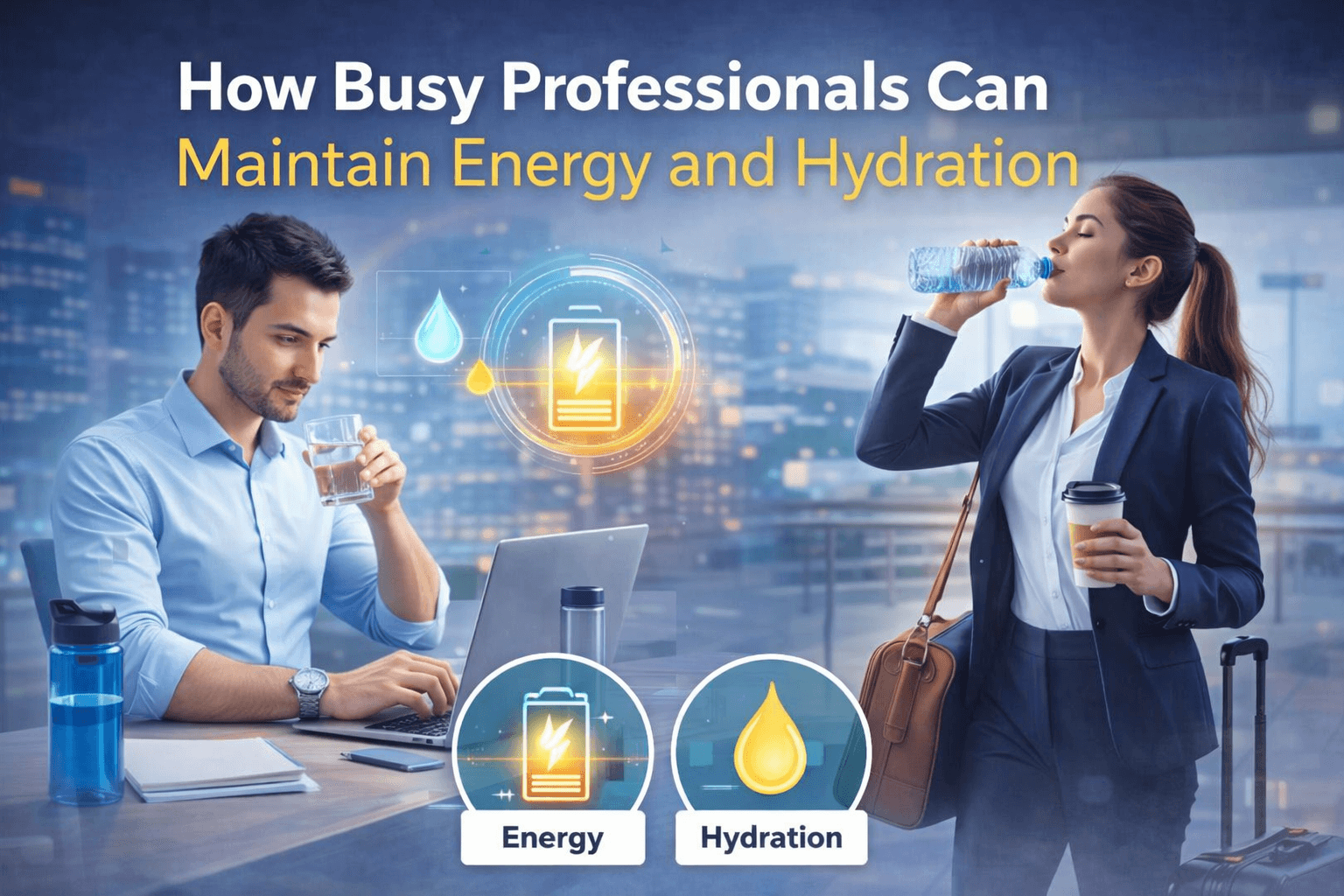
Long work hours, constant screen time, travel, and packed schedules have become normal for many professionals. While productivity tools and fitness routines get plenty of attention, two of the most important factors for sustained performance are often overlooked: energy management and proper hydration.
Understanding how hydration and recovery affect daily energy levels can help busy professionals stay focused, productive, and resilient throughout their demanding workdays and beyond.
Why Energy Levels Drop During Busy Schedules
Feeling drained by midday isn’t always caused by lack of sleep alone. The modern professional lifestyle creates multiple energy drains that compound throughout the day. Common contributors to low energy include:
- Chronic mild dehydration that goes unnoticed
- Poor nutrient intake during busy workdays when meals are skipped or rushed
- High stress levels from deadlines and competing priorities
- Frequent travel or irregular routines that disrupt natural rhythms
- Extended periods of sitting and limited physical movement
- Mental fatigue from constant decision-making and problem-solving
Even mild dehydration with as little as 1-2% loss of body water can affect concentration, mood, and physical performance, making it harder to stay productive throughout the day. Research suggests that this level of dehydration can impair cognitive function, reduce alertness, and increase feelings of fatigue and anxiety.
The Science Behind Hydration and Energy
Hydration plays a critical role in nearly every bodily function, including circulation, nutrient delivery, temperature regulation, and cellular energy production. When hydration levels drop, the body has to work harder to maintain balance, which can lead to fatigue and decreased performance.
Water makes up approximately 60% of body weight and is essential for transporting nutrients to cells, removing waste products, lubricating joints, and regulating body temperature. The brain, which is roughly 75% water, is particularly sensitive to hydration status. Even slight dehydration can reduce blood flow to the brain, affecting concentration, memory, and mood.
Drinking water regularly is essential, but hydration isn’t only about fluid intake. Electrolytes including sodium, potassium, magnesium, and calcium play vital roles in maintaining proper fluid balance, supporting nerve function, and enabling muscle contractions. Key nutrients also contribute to how efficiently the body maintains energy levels and recovers from daily stressors.
Understanding Your Hydration Needs
Individual hydration needs vary based on several factors including body size, activity level, climate, and overall health. While the common advice of “eight glasses a day” provides a general guideline, professionals should pay attention to their body’s signals.
Signs of inadequate hydration include:
- Persistent thirst or dry mouth
- Darker yellow urine (pale yellow indicates good hydration)
- Headaches, especially in the afternoon
- Difficulty concentrating or brain fog
- Muscle cramps or joint discomfort
- Reduced energy levels despite adequate sleep
Simple Hydration Habits for Busy Professionals
For professionals with demanding schedules, consistency matters more than perfection. Building sustainable habits creates lasting results. Some practical approaches include:
- Starting the day hydrated: Drinking water first thing in the morning helps replenish fluids lost overnight and jumpstarts metabolism.
- Drinking water steadily throughout the day instead of consuming large amounts all at once, which can overwhelm the body’s absorption capacity.
- Keeping water accessible: Having a water bottle at your desk serves as a visual reminder and removes barriers to regular hydration.
- Paying attention to hydration during travel or long meetings, when it’s easy to become distracted and forget to drink.
- Setting reminders: Using phone alerts or calendar notifications can help establish consistent hydration patterns.
- Replenishing fluids after workouts, high-stress days, or extended meetings to restore optimal hydration levels.
- Supporting hydration with balanced nutrition that includes water-rich foods like fruits and vegetables.
These habits can help prevent energy crashes and improve overall performance without requiring major lifestyle changes.
Recovery Matters as Much as Productivity
High-performing routines often focus exclusively on output, but recovery is just as important for sustained success. Without proper recovery, fatigue can accumulate, leading to decreased performance, increased errors, and eventually burnout.
Recovery doesn’t always require extensive time off or elaborate rituals. It can include:
- Adequate hydration to support cellular repair and waste removal
- Nutrient replenishment through balanced meals and strategic supplementation when needed
- Stress management techniques such as breathing exercises, short breaks, or brief walks
- Sleep consistency with regular bedtimes and wake times to support circadian rhythms
- Mental downtime to process information and restore cognitive resources
The cumulative effect of small recovery practices throughout the day can significantly impact long-term energy levels and performance capacity.
Modern Approaches to Hydration Support
In recent years, mobile wellness services have gained attention for their convenience and effectiveness. Mobile IV therapy, for example, is used by individuals looking for efficient hydration support without visiting a clinic or interrupting their schedules.
Providers such as Pure IV offer professionally administered mobile IV therapy designed to support hydration and wellness in a convenient setting. These services deliver fluids, electrolytes, and nutrients directly into the bloodstream, allowing for rapid absorption and immediate effects. This approach can be particularly helpful for professionals recovering from travel, intense work periods, or those seeking to optimize their wellness routine.
In states like Arizona and Nevada, mobile IV therapy services provided by Pure IV allow clients to receive hydration support at home, in the office, or at other convenient locations, minimizing disruption to daily routines while maximizing wellness benefits. The professional administration ensures safety and customization based on individual needs.
Building a Comprehensive Energy Management Strategy
Maintaining energy isn’t about quick fixes—it’s about creating a sustainable system. Hydration, nutrition, recovery, and stress management all play interconnected roles in how professionals perform day after day.
Consider developing a personalized energy management plan that includes:
- Regular hydration checkpoints throughout your day
- Scheduled breaks for movement and mental rest
- Balanced nutrition that supports sustained energy rather than quick spikes
- Recovery practices tailored to your lifestyle and preferences
- Periodic assessment of what’s working and what needs adjustment
By prioritizing hydration and recovery as part of a balanced lifestyle, busy professionals can support long-term performance without relying solely on short-term stimulants like excessive caffeine or energy drinks.
Final Thoughts
Energy management is an essential component of modern professional life that deserves the same attention given to productivity tools and career development. Simple hydration habits, combined with thoughtful recovery strategies, can make a measurable difference in focus, productivity, resilience, and overall well-being.
As wellness options continue to evolve and become more accessible, many professionals are exploring convenient solutions that fit seamlessly into their routines making hydration and recovery easier to maintain even during the busiest schedules. Whether through improved daily habits or strategic use of wellness services, investing in energy management pays dividends in both professional performance and quality of life.